For a pregnant guest, choosing a restaurant is rarely a casual decision. Beyond the obvious food-safety concerns — undercooked proteins, unpasteurised cheeses, contamination risks — there is another layer that often goes unaddressed: active nutritional support. The right meal, at the right stage of pregnancy, can deliver folate, iron, calcium, and Omega-3 in a single dish.
Restaurants that understand this don’t just earn loyalty. They become trusted destinations for a customer segment that dines out an average of 1.4 times per week throughout pregnancy and beyond. Here is how operators can rethink the menu to truly serve expecting diners.
Why pregnancy nutrition matters for restaurateurs
The average European woman undergoes between 35 and 42 weeks of intensified nutritional needs during pregnancy. Multiply that by the postpartum and breastfeeding window, and you are looking at almost two years of elevated demand for specific micronutrients. A restaurant that addresses this need explicitly — through menu engineering, staff training, and transparent communication — captures a uniquely loyal customer.
This is not a niche. The European hospitality market currently serves more than 4 million pregnant women each year, and yet fewer than 6% of restaurants surveyed in the 2025 SafeBloom Industry Report explicitly flag pregnancy-friendly options on their menus.
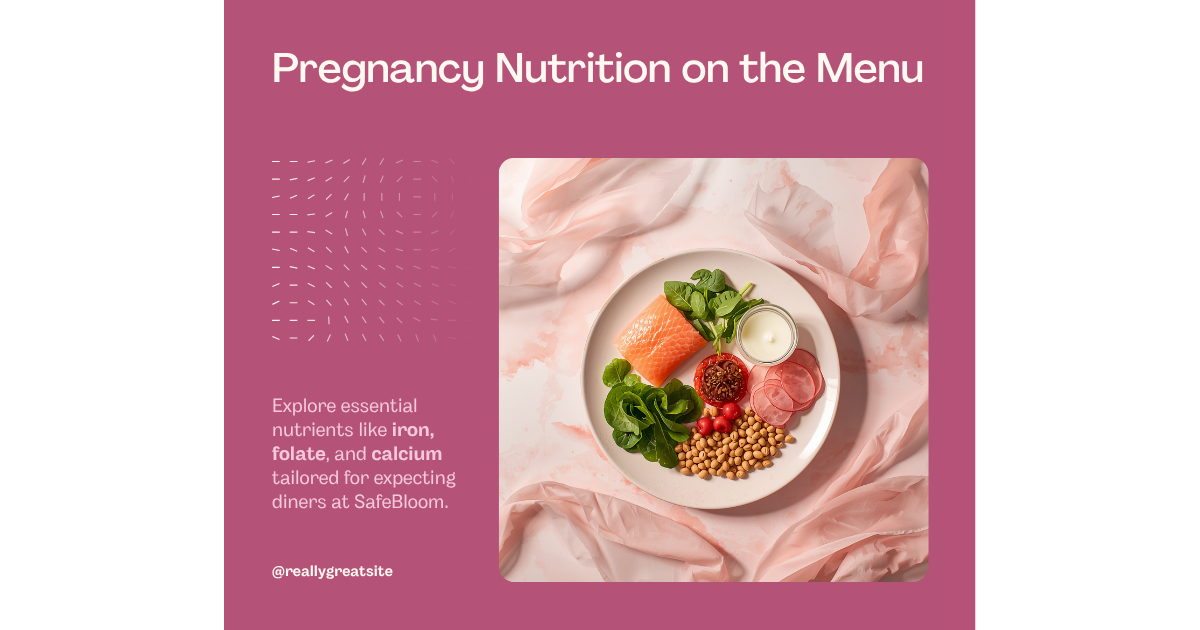
The four nutrients every pregnancy-aware menu should highlight
Folate (Vitamin B9)
Critical in the first trimester for neural tube formation, folate is one of the most under-served nutrients in restaurant cuisine. Highlighting dishes built around spinach, asparagus, broccoli, lentils, chickpeas and citrus fruits creates an immediate menu signal for first-trimester guests.
Operator tip: a simple folate icon next to qualifying dishes on the menu communicates value without requiring a separate “pregnancy menu”.
Iron (especially heme iron)
Iron requirements jump from 18 mg/day to 27 mg/day during pregnancy. Heme iron, found in animal sources, is significantly easier to absorb than plant-based non-heme iron. Restaurants are well positioned to deliver excellent options here: lean grass-fed beef, properly cooked liver pâté, dark-meat poultry, sardines and clams all qualify.
For vegetarian guests, pair non-heme iron sources (lentils, beans, fortified grains) with a vitamin C component (lemon dressing, bell peppers, citrus garnish) to multiply absorption rates by up to threefold.
Calcium
The fetal skeleton starts calcifying in the second trimester. Dairy is the obvious vehicle, but it has to be pasteurised — non-negotiable for pregnancy safety. Hard cheeses, Greek yogurt, milk-based sauces, and almond garnishes all work. Calcium-fortified plant-based alternatives are also acceptable; verify the fortification level with your supplier.
Important caveat: avoid soft, mould-ripened cheeses made from unpasteurised milk (traditional brie, raw-milk camembert, blue cheeses). Many restaurants make the mistake of assuming all premium cheese is safe — it isn’t.
Omega-3 (DHA)
The third trimester is when fetal brain development accelerates. DHA, an Omega-3 fatty acid, plays a leading role. Sardines, anchovies, mackerel, wild salmon and trout are excellent low-mercury sources. Walnuts and flaxseed offer plant-based alternatives.
Strictly avoid: bluefin tuna, swordfish, shark, marlin, and king mackerel — all flagged by EFSA as high-mercury species unsuitable during pregnancy.
Menu engineering: practical implementation
Adding pregnancy-friendly options doesn’t require a separate menu. Three approaches work well:
- Icon-based tagging. A small symbol next to qualifying dishes — verified by your certifying body — signals safety without alienating other guests.
- The “chef’s recommendation” approach. A trained server can confidently steer pregnant guests toward 3-4 dishes per section, increasing average ticket value through perceived expertise.
- Substitution flexibility. Train kitchen staff on three standard swaps: pasteurised dairy in place of fresh, well-cooked proteins in place of any rare or raw preparations, and citrus-based dressings instead of raw-egg emulsions like classic Caesar.
The hidden risks worth eliminating
Even an otherwise nutritionally excellent dish can become unsafe if the preparation introduces risk. Common kitchen errors that pregnancy-aware operators eliminate include:
- Tiramisu and homemade mayonnaise containing raw egg.
- Carpaccio, tartare, and sushi served as-is without explicit warning.
- Charcuterie boards mixing safe and high-risk cured meats without distinction.
- Salads pre-washed in industrial environments but stored uncovered alongside raw proteins.
- Pâtés (especially liver-based) prepared without precise temperature controls.
Training: the part most operators skip
The single biggest gap in pregnancy-friendly dining is not the menu — it’s the server’s ability to answer questions confidently. A pregnant guest asking “is this safe for me?” deserves a precise, factual answer, not a hedge.
Structured certification programs solve this. The SafeBloom Certified Pregnancy-Safe Restaurant course trains operators and front-of-house staff on the exact protocols, ingredient lists, and risk areas that matter — and gives the business a visible certification mark that pregnant diners actively look for.
The business case
Pregnancy-friendly positioning is rarely treated as a growth lever, yet the data is unambiguous. Restaurants that have completed SafeBloom certification report a 22% average increase in repeat visits from female guests aged 28-42, and a 17% lift in family-group bookings — including partners, parents, and friends accompanying the expecting customer.
This is a customer who plans, who returns, and who recommends. Serving her well is not charity. It is good business.
Ready to position your restaurant for this audience? Explore the SafeBloom certification course for operators, or download the free marketing kit to communicate your existing pregnancy-safe practices to guests today.