
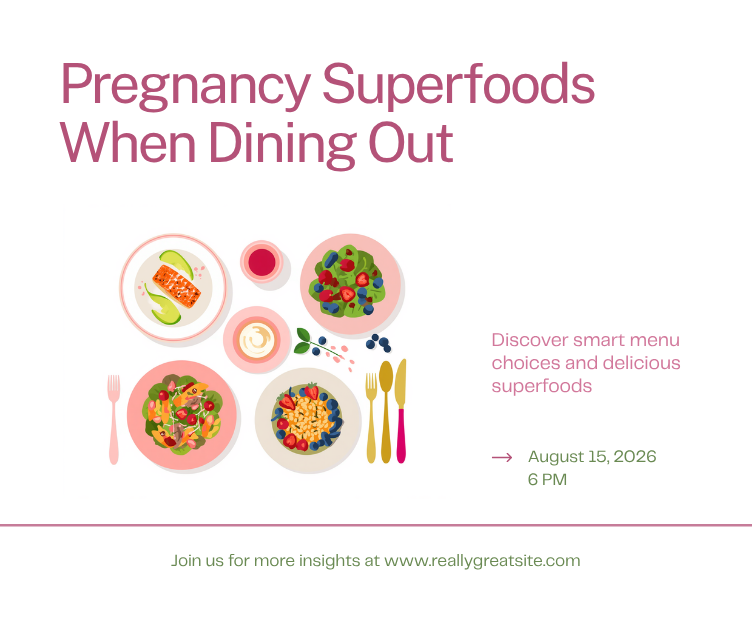
Eating out during pregnancy often gets framed as a list of “don’ts” — no raw fish, no unpasteurised cheese, no undercooked meat. But there’s a more empowering way to look at a restaurant menu: as an opportunity to get more of what your body actually needs right now. Some of the most nutrient-dense foods for pregnancy are restaurant staples. You just need to know what to order, and how to order it safely.
What makes a food a “pregnancy superfood”?
There is no official definition of a superfood, and no single ingredient works miracles. What matters is nutrient density: foods that deliver an outsized amount of the vitamins and minerals pregnancy demands — folate, iron, calcium, iodine, choline, omega-3 fatty acids and protein — per bite. Below are the categories worth seeking out on any menu, along with the safety rules that turn a good choice into a safe one.
1. Cooked oily fish: the omega-3 powerhouse
Salmon, sardines, mackerel and trout are rich in DHA, the omega-3 fatty acid that supports your baby’s brain and eye development, plus vitamin D and high-quality protein. European food safety authorities recommend 1–2 portions of oily fish per week during pregnancy.
How to order it safely: always cooked through — baked, grilled or pan-roasted until opaque. Skip sushi, sashimi, gravlax, and cold-smoked salmon, which carry a listeria risk. Choose smaller species over large predators like swordfish or bluefin tuna to keep mercury exposure low.
2. Leafy greens and cruciferous vegetables
Spinach, kale, rocket, broccoli and Brussels sprouts are loaded with folate, fibre, vitamin K and antioxidants. Cooked preparations — sautéed spinach, roasted broccoli, vegetable soups — are the safest restaurant option, because heat eliminates the toxoplasmosis and E. coli risk that can come with inadequately washed raw produce.
Ordering a salad? That’s fine in a kitchen you trust. It’s a fair question to ask how the greens are washed — a restaurant that takes food safety seriously will have a confident answer. This is exactly the kind of protocol covered in the SafeBloom certification course that certified restaurants complete.
3. Eggs — fully cooked
Eggs are one of the best dietary sources of choline, a nutrient critical for fetal brain development that most prenatal vitamins under-supply. A vegetable omelette or frittata is an outstanding pregnancy order.
The safety rule: fully set whites and yolks. Skip soft-poached eggs, runny fried eggs, and sauces made with raw egg — classic carbonara, fresh mayonnaise, some tiramisù — unless the restaurant confirms it uses pasteurised eggs.
4. Pulses and whole grains
Lentil soup, chickpea stews, hummus (from pasteurised ingredients), bean-based dishes and wholegrain sides deliver plant iron, folate, fibre and steady energy — a real advantage against the blood-sugar swings that can worsen pregnancy fatigue and nausea. Pair them with a vitamin C source (a squeeze of lemon, roasted peppers, a citrus side) to multiply iron absorption.
5. Yogurt and hard cheeses
Calcium needs stay high throughout pregnancy, and pasteurised dairy is the easiest way to meet them. Hard cheeses like Parmigiano Reggiano, Grana Padano, Comté and aged cheddar are safe even when made with raw milk, because their low moisture makes listeria growth virtually impossible. Greek yogurt with fruit makes an excellent dessert order. The ones to avoid: soft mould-ripened cheeses (brie, camembert) and blue cheeses, unless clearly labelled as made from pasteurised milk and cooked until piping hot.
6. Berries, citrus and colourful fruit
Vitamin C, potassium, folate and hydration in one package. Fruit-based desserts, fresh fruit plates and citrus-dressed dishes are smart ways to finish a meal. As with salads, washing matters — cooked or peeled fruit is the zero-risk option.
Building the perfect pregnancy plate at a restaurant
Put it together and a template emerges: a cooked protein rich in iron or omega-3s, a generous portion of cooked vegetables, a wholegrain or pulse side, and fruit or pasteurised dairy to finish. A grilled salmon fillet with sautéed spinach and farro, followed by Greek yogurt with berries, covers a remarkable share of your daily needs for DHA, folate, iron, calcium and choline — all from a standard European menu.
The restaurant matters as much as the order
Every recommendation above depends on one assumption: that the kitchen cooks food thoroughly, washes produce properly, and knows which ingredients carry risk. That’s precisely what the SafeBloom certification verifies. Certified restaurants have trained their staff on pregnancy-safe protocols, from cooking temperatures to allergen and ingredient transparency.
Ready to eat out with confidence? Browse our directory of SafeBloom certified restaurants, or verify a restaurant’s certification before you book. And if you run a restaurant that wants to welcome expecting guests properly, start with the SafeBloom certification course.