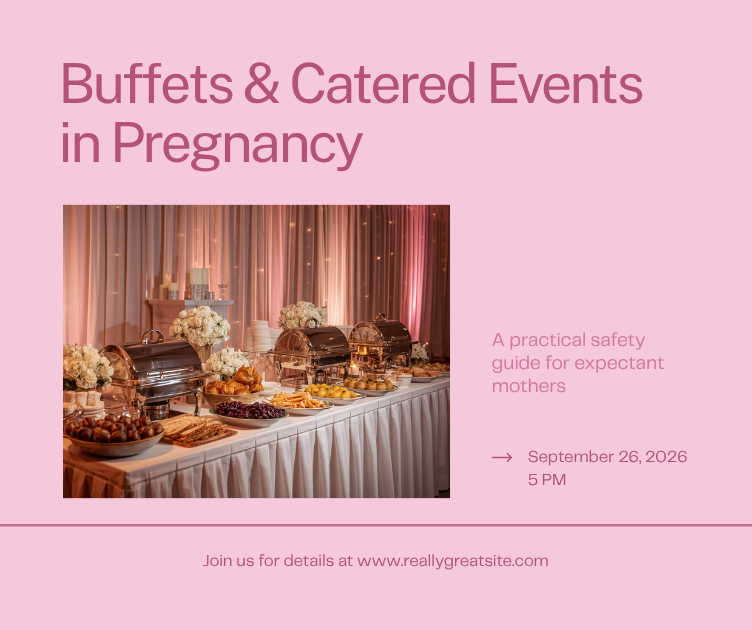
Weddings, baby showers, conference lunches, hotel breakfasts: pregnancy rarely coincides with a quiet social calendar. Buffets and catered events are some of the trickiest places to eat safely while pregnant, because you can’t see how the food was prepared, how long it has been sitting out, or who has handled the serving spoons. This guide explains where the real risks lie and how to fill your plate with confidence.
Why buffets deserve extra attention in pregnancy
During pregnancy, changes to the immune system make you more susceptible to certain foodborne infections, most notably Listeria monocytogenes. Pregnant women are significantly more likely than the general population to develop listeriosis, and the infection can be passed to the baby even when the mother has only mild symptoms.
Buffets combine several factors that food safety professionals watch closely:
- Time and temperature: food held between 5°C and 60°C (the “danger zone”) allows bacteria to multiply. Many buffet dishes sit out for hours.
- Cold, ready-to-eat foods: sliced meats, smoked fish, soft cheeses and pre-made salads are exactly the foods where Listeria can grow, even under refrigeration.
- Shared utensils and cross-contact: a spoon moved from the prawn cocktail to the potato salad can transfer bacteria and allergens.
- Limited information: there is often no one to ask about ingredients or preparation.
The traffic-light buffet guide
Green: generally safe choices
- Hot dishes that are visibly steaming: stews, curries, roasted vegetables, pasta bakes
- Meats cooked through and served hot, such as carved roast turkey or beef cooked well done
- Freshly cooked eggs from an omelette or egg station, cooked until yolk and white are firm
- Hard cheeses such as Parmesan, Cheddar or aged Gouda
- Bread, rolls, crackers and plain baked goods
- Whole fruit you can peel yourself, such as bananas and oranges
- Pasteurised juices, still or sparkling water
Amber: ask first or check conditions
- Salads and cut fruit: fine if freshly prepared and kept chilled on ice, less so if they have been sitting at room temperature.
- Mayonnaise-based dishes (coleslaw, potato salad): commercial mayonnaise is made with pasteurised egg, but homemade versions may not be.
- Cooked seafood: prawns and shellfish should be thoroughly cooked and kept cold; avoid if they look like they have been out for a while.
- Desserts: baked cakes are fine, but mousses, tiramisu and cheesecakes may contain raw egg or unpasteurised dairy.
Red: best avoided
- Cold-smoked salmon, gravlax and other cold-smoked fish (unless cooked into a hot dish)
- Pâté, including vegetable pâtés, and cold cured meats such as salami or prosciutto
- Soft mould-ripened cheeses (Brie, Camembert) and soft blue cheeses, unless baked until steaming
- Sushi with raw fish, oysters, ceviche and carpaccio
- Raw sprouts such as alfalfa or bean sprouts
- Sauces made with raw egg, such as fresh aioli or hollandaise
Timing and technique at the buffet
- Go early. Dishes are safest when they have just been put out. If you can, be among the first in line.
- Look for temperature control. Hot food should be in chafing dishes that are genuinely hot; cold food should be on ice or in refrigerated displays.
- Use a clean plate every trip. This limits cross-contamination and is standard good practice.
- Watch the serving utensils. If spoons have migrated between dishes, choose something else or ask for a fresh utensil.
- Don’t wait for leftovers. Food that has been out for more than two hours, or one hour in hot weather, is best skipped.
Weddings and private events: plan ahead
At a wedding or catered party, you usually know the menu in advance. Use that to your advantage:
- Contact the host or caterer when you RSVP. Most caterers are used to dietary requests and can prepare a pregnancy-safe plate, just as they do for allergies or vegetarian guests.
- Be specific. Rather than just saying “I’m pregnant”, mention the key points: no raw or undercooked meat, fish or eggs, no cold-smoked fish or pâté, no unpasteurised cheese.
- Ask about canapés. Passed appetisers often feature smoked salmon, tartare or soft cheese. Knowing which ones are safe saves you from guessing in the moment.
- Bring a snack. Long receptions can mean hours between meals. A cereal bar in your bag helps if the options turn out to be limited.
Hotel breakfasts while travelling
Hotel breakfast buffets are a staple of travel across Europe. Favour cooked-to-order eggs, porridge, toast, yoghurt made from pasteurised milk and whole fruit. Be cautious with the continental cold platter: cured hams, smoked fish and soft cheeses are common. If you are unsure whether the milk or cheese is pasteurised, especially at small guesthouses and farm stays, simply ask.
What good caterers do differently
For hospitality professionals, pregnant guests are a growing and loyal audience. Caterers and restaurants that take pregnancy safety seriously tend to share some habits: they label dishes clearly, keep strict time and temperature logs for buffet service, use pasteurised eggs for sauces and desserts, and train staff to answer questions confidently. These are exactly the practices covered in SafeBloom certification.
Eat with confidence
Pregnancy is a time to celebrate, and that includes the meals you share with others. With a little planning and a few smart choices, buffets and events can be both safe and enjoyable.
Looking for venues and restaurants that already understand pregnancy food safety? Browse our directory of SafeBloom-certified restaurants or check any venue’s status on our verification page. Run a restaurant, hotel or catering business? Explore the SafeBloom certification course and show pregnant guests they are in safe hands.
This article is for general information and does not replace advice from your doctor or midwife.