
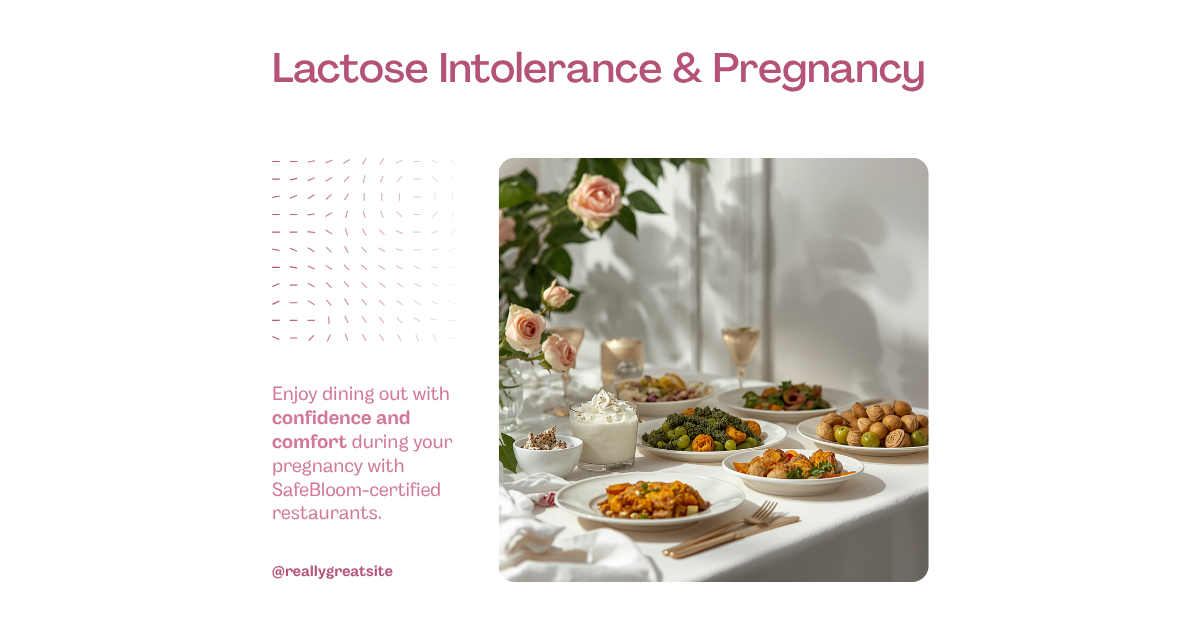
If you became more sensitive to dairy the moment you got pregnant, you are not imagining it. Lactose intolerance commonly intensifies during pregnancy, and for many women it appears for the first time. Suddenly the cheese plate you always loved or the creamy pasta you ordered without a second thought can leave you bloated, cramping and uncomfortable for hours. Eating out shouldn’t feel like a gamble — and with a little knowledge, it doesn’t have to.
Why pregnancy and lactose don’t always get along
Lactose is the natural sugar in milk, broken down by an enzyme called lactase. Pregnancy hormones slow digestion and shift how your gut works, which means lactose can sit longer and ferment, producing the gas, bloating and cramps that make dairy feel like the enemy. The good news: lactose intolerance is about comfort, not danger. Unlike a true milk allergy, it won’t harm your baby — but the discomfort is real, and so is the worry about getting enough calcium.
That last point matters. Pregnancy raises your calcium needs to support your baby’s developing bones, and dairy is one of the easiest sources. Cutting it entirely without a plan can leave a gap. The goal isn’t to avoid all dairy out of fear — it’s to choose wisely and know your alternatives.
Dairy that’s usually easier to tolerate
Here’s the encouraging part: not all dairy hits the same way. Many women with mild lactose intolerance can still enjoy certain foods, because the lactose has already been partly broken down or is present in small amounts:
Hard, aged cheeses like Parmigiano Reggiano, pecorino and aged cheddar are naturally very low in lactose — though in pregnancy you’ll want to confirm they’re made from pasteurised milk. Yogurt with live cultures often digests more easily because the bacteria help break down lactose. Butter contains only trace amounts. And lactose-free milk, now widely available, gives you all the calcium with none of the trouble.
Knowing this list turns a restaurant menu from a minefield into a set of manageable choices. You don’t have to say no to everything — you have to say yes to the right things.
How to navigate a menu with confidence
Ordering out with lactose intolerance is mostly about asking the right questions before the food arrives. A few habits make all the difference:
Ask how a dish is prepared, not just what’s in it
Cream can hide in places the menu never mentions: a tomato sauce finished with butter, a soup thickened with milk, mashed potatoes loaded with dairy. A simple “Is there any cream, milk or butter in this?” saves you hours of regret.
Request simple swaps
Most kitchens can dress a dish in olive oil instead of butter, leave the cheese off, or serve a sauce on the side so you control how much you take. Good restaurants treat these requests as normal, not as an imposition.
Lean on naturally dairy-free dishes
Grilled fish or chicken with vegetables, a tomato-based pasta, a risotto made without the final knob of butter, many Mediterranean and Asian dishes — these give you a satisfying meal without the dairy worry built in.
The restaurant’s role in your comfort
You shouldn’t have to do all the work yourself. A well-run kitchen knows exactly which dishes contain dairy and can tell you without hesitation. Under EU food law, restaurants are required to declare milk as one of the 14 major allergens — so the information should always be available if you ask. The difference between a stressful meal and a relaxed one often comes down to whether the staff take your question seriously.
This is where certified restaurants stand out. A venue that has been trained to handle the specific needs of pregnant guests won’t just tolerate your questions — it will anticipate them. Clear ingredient knowledge, confident answers and a genuine willingness to adapt are signs you’re in good hands.
Keeping your calcium on track
If you’re cutting back on dairy, build calcium back in from other sources: fortified plant milks, canned fish with soft bones like sardines, leafy greens, almonds, tofu set with calcium, and lactose-free dairy products. Spreading these across your day helps you meet the higher demands of pregnancy without relying on foods that leave you uncomfortable. If you’re unsure whether you’re getting enough, your midwife or doctor can help you check.
Eat out, enjoy it, and trust where you go
Lactose intolerance in pregnancy is a manageable bump in the road, not a reason to give up dining out. With a short list of foods you tolerate, a few good questions and a restaurant that’s genuinely on your side, you can enjoy a meal out the way every expectant mother deserves — without spending the evening regretting it.
Want to dine somewhere that already understands your needs? Browse our directory of SafeBloom-certified restaurants, where staff are trained to handle allergens and intolerances with care. Run a restaurant and want to welcome pregnant guests with confidence? Discover the SafeBloom certification course.