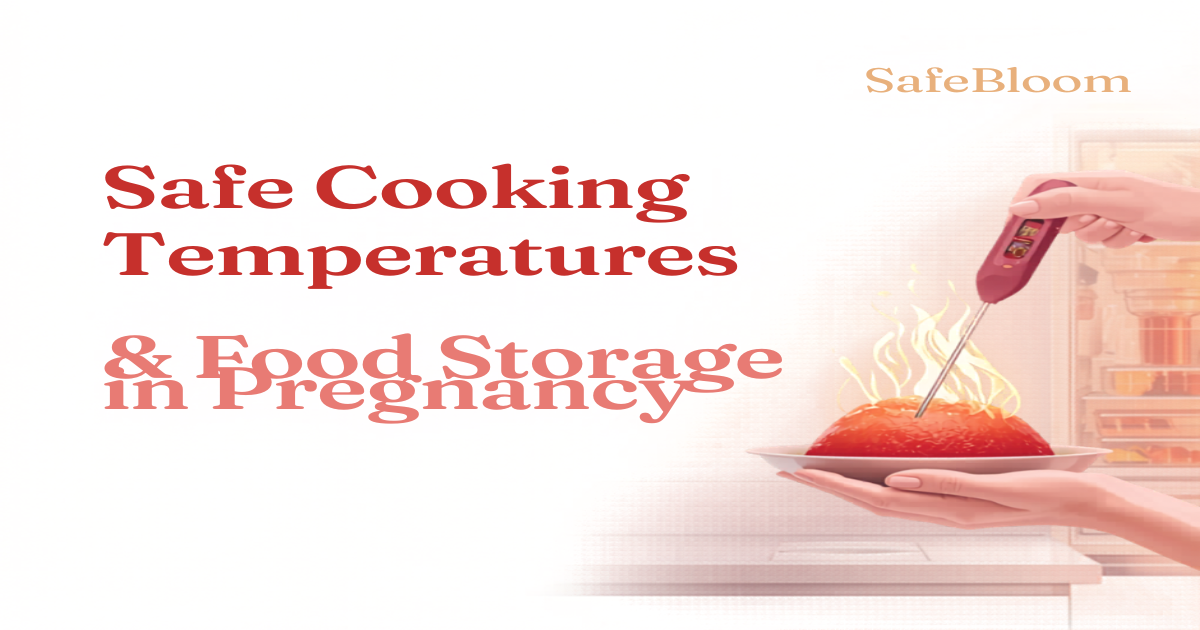
Avoiding the wrong foods is only half of pregnancy food safety. The other half — the part that often gets overlooked — is how food is cooked, cooled, and stored. A perfectly safe ingredient can become risky if it sits too long at the wrong temperature or shares a cutting board with raw meat. This guide walks you through the cooking temperatures and storage habits that keep harmful bacteria away from your plate during pregnancy.
Why temperature matters more during pregnancy
Pregnancy naturally shifts the immune system to protect the developing baby, which leaves the mother more susceptible to foodborne pathogens such as Listeria, Salmonella and Toxoplasma. These organisms are remarkably sensitive to heat: proper cooking destroys them almost entirely. The challenge is that they thrive in the “danger zone” between 4 °C and 60 °C (40–140 °F), where most kitchen mistakes happen.
Understanding two simple numbers — how hot to cook and how cold to store — removes most of the guesswork.
Safe cooking temperatures, food by food
A food thermometer is the single most reliable tool in a pregnancy-safe kitchen. Colour and texture can mislead; an internal temperature reading does not. Here are the targets worth memorising:
Poultry
Chicken, turkey and duck should reach an internal temperature of 74 °C (165 °F). Check the thickest part of the meat, avoiding the bone, which conducts heat differently.
Ground and minced meat
Burgers, meatballs and sausages need 71 °C (160 °F) throughout. Because grinding spreads any surface bacteria through the whole mixture, “medium” is never safe during pregnancy.
Whole cuts of beef, pork and lamb
Steaks and roasts are safe at 63 °C (145 °F) followed by a three-minute rest. For peace of mind, many expectant mothers prefer their meat well done.
Fish and seafood
Fish should reach 63 °C (145 °F) and flake easily with a fork. Skip raw preparations such as sushi and oysters entirely until after delivery.
Leftovers and reheated dishes
Any reheated food — including ready meals and deli items — should be heated until steaming hot throughout, ideally 74 °C (165 °F), not merely warm.
Storage habits that prevent contamination
Even flawless cooking can be undone by poor storage. Keep your refrigerator at or below 4 °C (40 °F) and your freezer at -18 °C (0 °F); an inexpensive fridge thermometer takes the guesswork out. Refrigerate leftovers within two hours of cooking — within one hour if the room is warm — because bacteria multiply rapidly at room temperature.
Store raw meat on the bottom shelf in a sealed container so juices cannot drip onto ready-to-eat foods. Use separate cutting boards and utensils for raw and cooked items, and wash hands, surfaces and tools thoroughly after handling raw protein. Finally, respect use-by dates: when in doubt, throw it out.
The two-hour rule, made simple
If perishable food has been sitting out for more than two hours — or one hour in hot weather — it belongs in the bin, not back in the fridge. This single habit prevents a large share of foodborne illness and is especially important when you are eating for two.
What this means when you eat out
At home you control every temperature and surface. In a restaurant, you are trusting someone else’s kitchen to follow the same discipline. That is exactly why food-safety standards behind the scenes matter so much for expectant diners — and why a transparent, verifiable standard gives real peace of mind.
Eating out soon? Find venues that have committed to pregnancy-safe practices in our SafeBloom certified restaurant directory, or confirm a venue’s status with our certification verification tool. You bring the appetite — let the kitchen handle the safety.