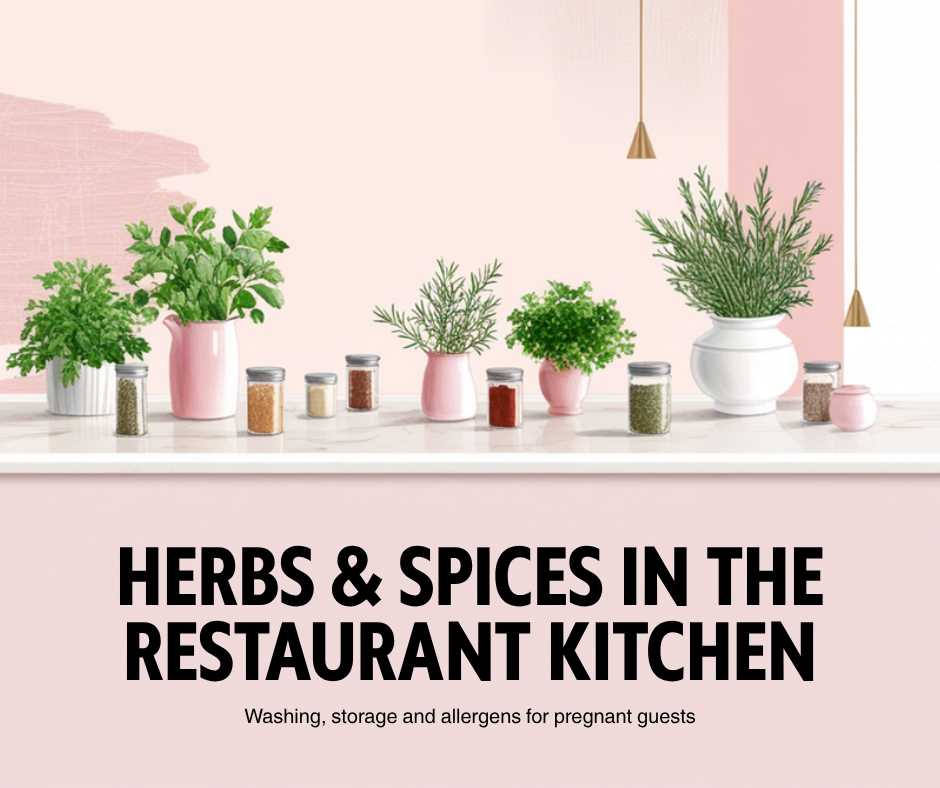
Fresh herbs and dried spices rarely make the headlines in restaurant food safety. They are added at the end of a dish, in small amounts, and nobody thinks of them as a “high-risk” ingredient. Yet for a pregnant guest, how a kitchen handles herbs and spices is a small but telling signal of how seriously it takes hygiene. This guide looks at the topic from the kitchen’s side: what to control, and why it matters for pregnant guests.
Two different ingredients, two different risks
Fresh herbs behave like leafy vegetables. They grow close to the soil, are often eaten raw, and are used as garnish or in uncooked sauces such as pesto, salsa verde, chimichurri or tzatziki. Dried spices are the opposite: shelf-stable, bought in bulk and stored for months, but sometimes added to a dish after cooking.
Fresh herbs: washing is the control point
Guidance from the NHS and from Italy’s ISS/EpiCentro on preventing toxoplasmosis in pregnancy says raw fruit, vegetables and herbs should be washed thoroughly because soil can carry Toxoplasma gondii. Raw produce is also a recognised route for Listeria, which EFSA and ECDC report as a continuing concern in ready-to-eat foods. In a professional kitchen this translates into a written, repeatable routine:
- Remove damaged leaves and roots, then wash in clean running water or in a dedicated sink, never in the hand-wash basin.
- Use a sink and utensils that are cleaned between raw meat and produce tasks.
- Dry on clean equipment and keep washed herbs refrigerated, labelled with the preparation date.
- Record the routine in your HACCP self-control plan, so any team member can follow it.
Dried spices and blends: store, label, add at the right time
Dried herbs and spices are generally low-risk in cooked dishes, because heat in the cooking step reduces most microbial concerns. The weaker point is late addition: spice sprinkled over a finished carpaccio, tartare or cold sauce does not go through any kill step. The practical measures are simple:
- Buy from suppliers who can provide traceability documents, and keep delivery records.
- Store in closed, clean, dry containers; avoid refilling from open bags with scoops that touch other foods.
- Label decanted spices with name, date and supplier lot where possible.
- Where a dish is meant to be served raw or cold, prefer spices added during preparation and heat-treated, or ask the supplier about treated products.
Supplier checks are covered in more depth in our guide on supplier verification in HACCP.
Spice blends and allergens
Blends such as curry mixes, barbecue rubs, “Italian seasoning” or ras el hanout can contain celery, mustard, sesame or other allergens from the EU’s list of 14, and the label may not say so clearly. Under EU Regulation 1169/2011 allergen information must be available for non-prepacked food, so staff should be able to read the ingredient list of every blend in use. For a pregnant guest with an allergy, this is an area where “I think it’s just pepper” is not an acceptable answer.
Plant-based extras: tea blends and infusions
Herb-based drinks are where guests can run into plants with limited pregnancy-safety data. The NHS advises limiting liquorice in pregnancy because of glycyrrhizin, and cautions about herbal remedies in general. Menus that list the full ingredients of each infusion help guests choose without guessing.
Training the front of house
A pregnant guest may simply ask whether herbs on a dish are fresh and washed, or if a spice mix contains an ingredient she needs to avoid. A server who can answer calmly, or check with the kitchen, builds trust quickly. A short briefing before service is enough: which dishes carry raw herbs, which blends contain allergens, who to ask.
Where SafeBloom fits in
SafeBloom is a training-based mark: restaurants complete an 8-hour online course (4 modules) and pass a 15-question final exam, with the certificate valid for 12 months. SafeBloom does not carry out kitchen audits or inspections, so the day-to-day application of these practices remains the restaurant’s responsibility. What the training does provide is a shared framework your team can apply consistently.
Ready to train your team? Explore the SafeBloom certification course, see our method and visit the page for restaurants. Guests can use the Restaurant Finder (it also lists non-verified venues) to look for places near them.