
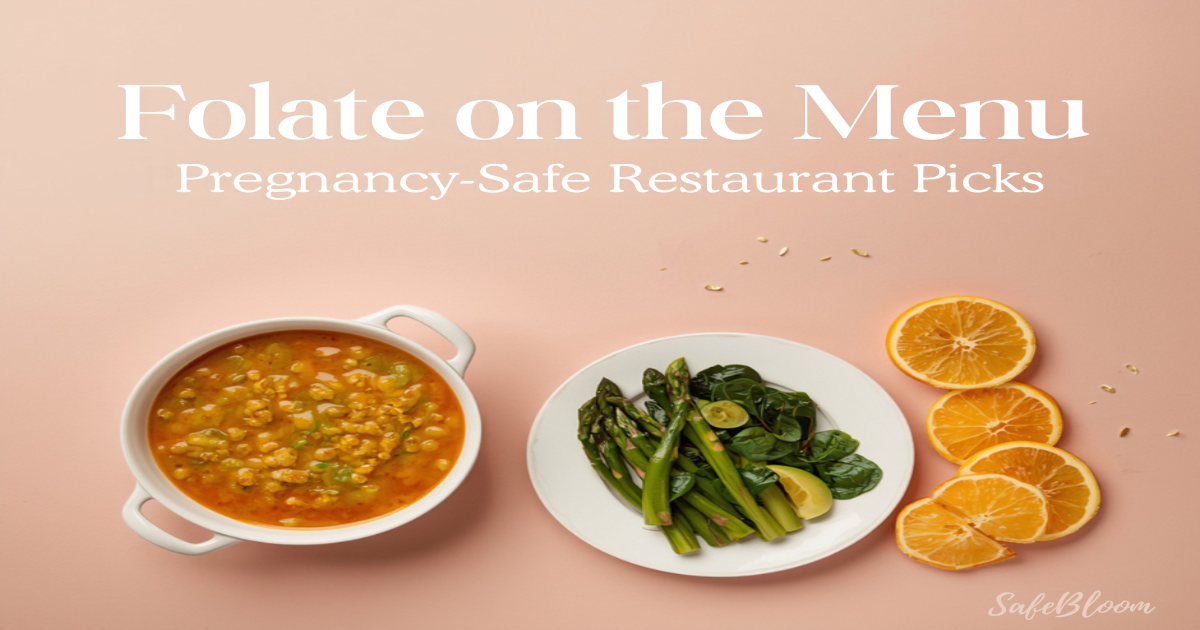
Folate is the first nutrient most women hear about when they find out they are pregnant, and for good reason: adequate intake in the weeks around conception and through the first trimester reduces the risk of neural tube defects by up to 70%. A daily supplement of 400 µg folic acid is the standard recommendation across Europe. But the supplement is a floor, not a ceiling, and the food you eat, including the food you eat out, still matters. This guide explains what folate does, which restaurant dishes are rich in it, how cooking affects it, and how to order a folate-friendly meal that is also pregnancy-safe.
Folate vs. folic acid: a quick clarification
Folate is the natural form of vitamin B9 found in food. Folic acid is the synthetic form used in supplements and fortified products. Both are converted by the body into the active form used to build DNA and new cells. During pregnancy the recommended intake rises to 600 µg dietary folate equivalents per day, and the requirement stays elevated during breastfeeding. Because folic acid supplements are so well studied, they remain essential, but a folate-rich diet supports the same goal and brings fibre, iron, potassium and antioxidants along with it.
Why restaurants are trickier than they look
Folate is water-soluble and heat-sensitive. Boiling spinach for ten minutes can lose half its folate into the water; leaving a salad on a hot pass under a lamp degrades it too. Restaurant kitchens often cook vegetables ahead, hold them warm and reheat them. On the other hand, many of the richest folate sources, such as raw leafy greens and sprouts, are exactly the foods that carry the highest Listeria and Salmonella risk when they are not washed and handled correctly. The goal is to find dishes that are both folate-dense and safely prepared.
The best folate sources on a European menu
Pulses and legumes
Lentils are the star: a cooked 200 g portion provides around 350 µg of folate, more than half the pregnancy target. Chickpeas, black beans, borlotti and cannellini beans follow closely. Look for lentil soup, dal, chickpea stew, pasta e fagioli, hummus and bean-based salads. Legumes are cooked thoroughly by definition, which makes them one of the safest orders on any menu.
Cooked leafy greens
Spinach, chard, kale, broccoli rabe and cavolo nero all deliver 100-150 µg per cooked portion. Sautéed or steamed briefly they keep most of their folate. Ask whether greens are cooked to order rather than boiled and held; a kitchen that sautés spinach with garlic and olive oil when the dish is fired is doing it right.
Asparagus, broccoli and Brussels sprouts
Five spears of asparagus give roughly 130 µg; a portion of broccoli around 100 µg. Grilled, roasted or steamed, these are safe, common and easy to add as a side to almost any main course.
Avocado and citrus
Half an avocado contains about 80 µg of folate, and avocado toast or guacamole are widely available. Oranges and grapefruit add 30-40 µg each along with vitamin C, which improves iron absorption from the same meal, a useful bonus when you order lentils.
Eggs, well cooked
Two eggs provide around 50 µg of folate plus choline, another nutrient critical for foetal brain development. In a restaurant, order them fully set: omelettes, frittatas and hard-boiled eggs are fine, runny yolks and raw-egg sauces are not.
Fortified breads and cereals
Fortification rules differ across Europe. The UK began mandatory folic acid fortification of non-wholemeal wheat flour in 2024, while most EU countries rely on voluntary fortification of breakfast cereals and some breads. If a menu lists a fortified product, it is a helpful extra, but do not count on it.
The folate sources to be careful with
- Raw sprouts (alfalfa, mung bean, clover): very rich in folate but a recognised Salmonella and E. coli risk. Skip them unless cooked.
- Pre-cut raw salads and bagged leaves: only safe if the restaurant washes and sanitises them properly and keeps them chilled. A certified pregnancy-safe kitchen has a documented procedure; if you are unsure, choose cooked greens instead.
- Liver and pâté: extremely high in folate, but also in preformed vitamin A, which can be harmful in pregnancy. Liver is best avoided; pâté also carries a Listeria risk.
- Unpasteurised juices and smoothies: fresh orange juice is a great folate and vitamin C source, but only if it is pasteurised or freshly squeezed from washed fruit.
How to build a folate-rich, pregnancy-safe order
A practical formula works in almost any type of restaurant:
- Start with a legume dish: lentil soup, hummus, chickpea salad, dal or a bean stew.
- Add a cooked green vegetable: sautéed spinach, steamed broccoli, grilled asparagus.
- Choose a fully cooked protein: well-done beef, chicken, cooked fish or a set omelette.
- Finish with citrus or fresh fruit that has been washed and cut in a clean kitchen.
In an Italian trattoria this could be pasta e ceci, followed by grilled chicken with spinaci saltati and an orange for dessert. In an Indian restaurant, dal with a vegetable curry and rice. In a Mexican place, black beans with guacamole and grilled meat, skipping the raw sprouts and unpasteurised cheese. Each of these meals delivers 300-450 µg of folate.
Questions to ask the server
Three questions cover most of the risk: Are the greens cooked to order? Are the eggs fully cooked? Are raw salads and fruit washed in-house? Staff at a SafeBloom Certified Pregnancy-Safe Restaurant have been trained to answer these confidently and to point you to the dishes on the menu that are suitable for pregnancy.
A note for restaurant owners
Folate-rich dishes are already on your menu: you just need to make them visible. Marking a lentil soup, a legume-based pasta or a greens side as “rich in folate, suitable for pregnancy” takes minutes and speaks directly to an audience that is actively searching for safe places to eat. Combine that with a written procedure for washing raw produce and a policy of cooking eggs and meat through, and you have most of what certification asks for. The SafeBloom marketing kit includes ready-made menu labels for exactly this purpose.
Key takeaways
Keep taking your folic acid supplement. On top of that, order legumes at every opportunity, prefer cooked greens over raw ones unless you trust the kitchen, add asparagus or broccoli as a side, avoid sprouts and liver, and finish with citrus. Folate is one of the easiest nutrients to find when eating out, as long as you know where to look.
Ready to eat out with confidence? Find a SafeBloom certified restaurant near you or verify a restaurant’s certification before you book. Running a restaurant? Discover the SafeBloom certification course and make your menu the safe choice for expecting mothers.
This article is for general information only and does not replace advice from your doctor, midwife or a registered dietitian.