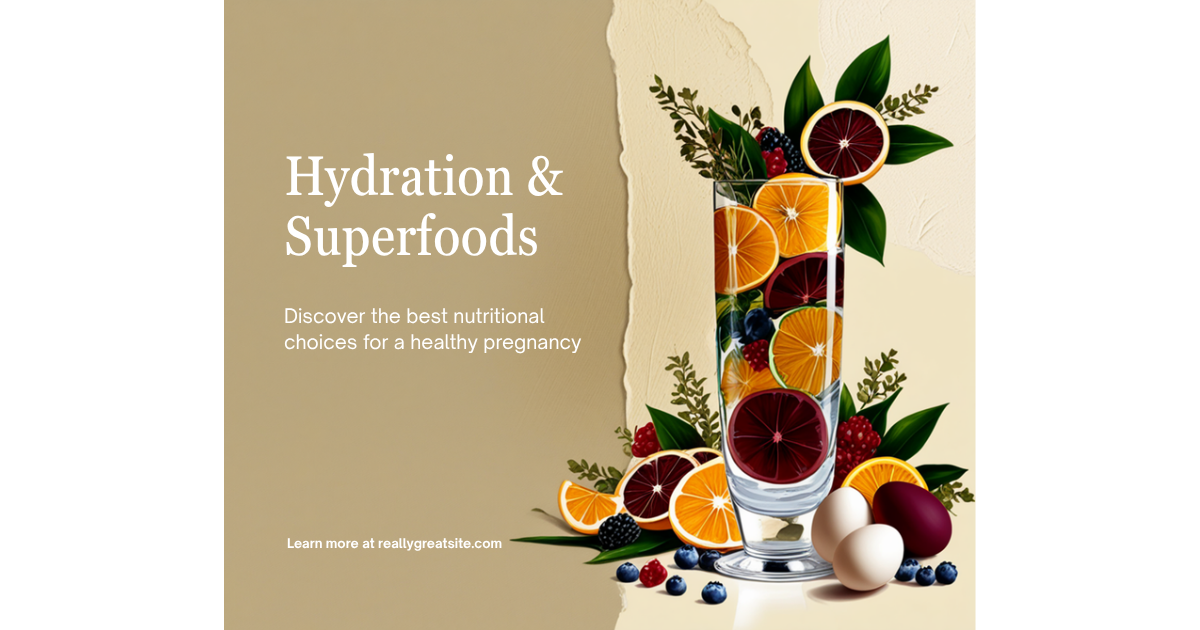
When we talk about eating well in pregnancy, the conversation often jumps straight to vitamins and supplements. But two of the most powerful tools for a healthy pregnancy are simpler and easy to overlook: staying properly hydrated and choosing nutrient-dense “superfoods” that pack a lot of goodness into every bite. Here is what the evidence actually supports — and how to put it on your plate.
Why hydration matters more than you think
During pregnancy, your blood volume increases dramatically to supply oxygen and nutrients to your growing baby. Water is the foundation of that expanded blood supply, and it also forms the amniotic fluid that cushions and protects your baby. Good hydration supports digestion, helps regulate body temperature, and carries nutrients to the placenta.
Staying well hydrated also eases some of the most common pregnancy complaints. Constipation, swelling, urinary tract infections, and fatigue can all be aggravated by not drinking enough. In the later stages, mild dehydration can even trigger Braxton Hicks contractions.
How much, and how to get it
Most guidelines suggest around 1.5 to 2 litres of fluid a day, though your needs rise in hot weather, during exercise, or if you are experiencing morning sickness. Water is the best choice, but you can vary it with milk, diluted fruit juices, herbal infusions considered safe in pregnancy, and water-rich foods. If plain water feels boring, try adding slices of well-washed citrus, cucumber, or a few crushed mint leaves.
A practical tip: keep a bottle within arm’s reach and sip throughout the day rather than gulping large amounts at once. Pale, straw-coloured urine is a reliable everyday sign that you are drinking enough.
What about caffeine?
Coffee and tea count toward your fluids, but caffeine should be limited in pregnancy — typically to no more than 200 mg a day, roughly one to two cups of coffee. High intakes have been linked to lower birth weight, so it is wise to keep track of hidden sources like cola, energy drinks, and chocolate.
Superfoods worth a place on your plate
“Superfood” is a marketing term rather than a scientific category, but some everyday foods genuinely deliver an outstanding nutrient density for pregnancy. The goal is not to chase exotic powders, but to lean on accessible, affordable options.
Leafy greens
Spinach, kale, and other dark greens are rich in folate, iron, calcium, and fibre. Folate is essential in early pregnancy for healthy neural development. Always wash leaves thoroughly, and if eating them raw, choose produce you can clean well to reduce the risk of foodborne illness.
Eggs
Well-cooked eggs are an excellent source of high-quality protein and choline, a nutrient that supports your baby’s brain development and is often under-consumed. Cook them until both white and yolk are firm.
Legumes
Lentils, chickpeas, and beans are nutritional powerhouses: plant protein, iron, folate, and fibre all in one. The fibre is particularly helpful for keeping digestion regular, a frequent struggle in pregnancy.
Berries and citrus
Rich in vitamin C and antioxidants, berries and citrus fruits also help your body absorb iron from plant sources. Their natural sweetness makes them a satisfying snack that supports hydration too, thanks to their high water content.
Yoghurt and dairy
Pasteurised yoghurt and dairy provide calcium and protein, and yoghurt offers beneficial probiotics. Always choose pasteurised products and avoid unpasteurised soft cheeses, which carry a listeria risk.
Oily fish — chosen carefully
Salmon, sardines, and mackerel are among the best sources of omega-3 DHA, vital for your baby’s brain and eyes. Choose low-mercury species, keep portions moderate, and always cook fish thoroughly.
Building good habits, not perfect ones
You do not need a flawless diet. Aim for a colourful, varied plate across the week: half vegetables, a quarter whole grains, a quarter well-cooked protein, plus fruit and a source of healthy fats. Combine that with steady hydration, and you cover the vast majority of what your body and baby need. Small, frequent meals can also help if nausea or heartburn make large plates unappealing.
Hydration, nutrition, and safety go together
Even the most nutrient-dense meal only helps if it is also safe. Wash produce carefully, cook proteins fully, stick to pasteurised dairy, and pay attention to storage. When you eat out, that same standard should apply — which is not always easy to verify from the table.
Want to dine out with confidence? Explore our directory of SafeBloom-certified restaurants to find venues that follow pregnancy-safe practices, or verify a restaurant’s certification before you book. Run a restaurant and want to welcome expecting guests with confidence? Discover the SafeBloom certification course.