
Most foodborne risks that matter in pregnancy are invisible. A piece of smoked salmon that sat at 8°C instead of 2°C for a few hours looks, smells and tastes exactly the same as one that was kept cold. The difference lives in the numbers: Listeria monocytogenes multiplies roughly twice as fast at 8°C as it does at 4°C, and it keeps growing, slowly, even in a well-functioning fridge. That is why the quiet revolution happening in restaurant kitchens across Europe, the shift to connected, sensor-based cold-chain monitoring, matters so much to pregnant diners.
What cold-chain monitoring actually means
The “cold chain” is the unbroken sequence of refrigerated storage and transport that a perishable food passes through, from processing plant to delivery van to walk-in fridge to prep station. Every link in that chain has a target temperature range. Traditionally, restaurants verified compliance by having someone read a thermometer twice a day and write the result on a paper log.
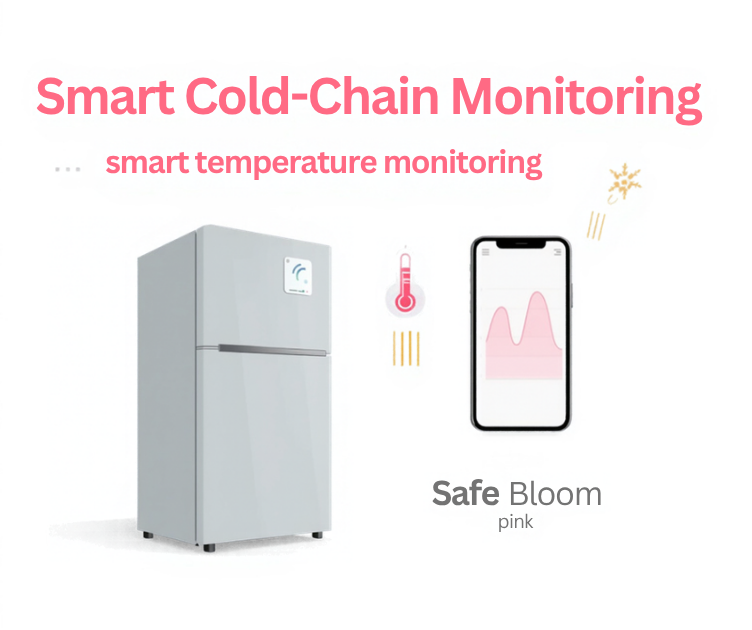
Internet of Things (IoT) monitoring replaces that manual routine with small wireless sensors placed inside fridges, freezers, display cabinets and delivery containers. The sensors record temperature (and often humidity and door-open events) every few minutes, send the data to a cloud dashboard, and trigger an alert on the manager’s phone the moment a reading drifts outside the safe range.
Why this is a pregnancy-safety technology, not just a compliance tool
For most adult diners, a fridge that ran a few degrees warm overnight is unlikely to cause harm. For someone who is pregnant, the calculation is different. Listeriosis is rare, but pregnant women are estimated to be around ten times more likely to contract it than the general population, and the infection can cross the placenta. The foods most associated with it, soft cheeses, cold smoked fish, deli meats, pre-cut salads and pâtés, are precisely the ones whose safety depends on uninterrupted cold storage.
Continuous monitoring closes three gaps that paper logs leave open.
The overnight gap
A compressor failure at 11 pm is discovered at 8 am with a manual check. With IoT sensors, the manager receives an alert within minutes and can move stock or discard it before it reaches a customer. For high-risk foods, those nine hours are the difference between safe and unsafe.
The door-open gap
During a busy service, a walk-in fridge door may be opened dozens of times. Each opening lets warm air in, and the internal temperature can creep up without anyone noticing. Sensors log both the temperature curve and the door events, so the kitchen can see when a fridge is being used in a way that compromises its contents.
The delivery gap
The riskiest link is often the one the restaurant does not control: the supplier’s van. Data loggers placed in delivery crates now allow the receiving kitchen to see the full temperature history of a shipment before signing for it. A crate of fresh fish that spent forty minutes above 5°C can be refused on the spot.
What the data looks like in practice
A modern monitoring dashboard shows, for each cold unit, a continuous temperature line with the safe band shaded, timestamps for every excursion, how long each excursion lasted, and who acknowledged the alert. Many systems also generate the HACCP records automatically, which means the documentation an inspector asks for already exists, complete and tamper-evident.
Some restaurants go a step further and make part of this data visible to guests, for instance by noting on a digital menu that a dish’s key ingredient has a verified cold-chain history. That is still uncommon, but it points toward a future in which “how was this kept?” is as easy to answer as “what is in it?”.
What pregnant diners can ask
You do not need to see a dashboard to benefit from this technology. A few well-chosen questions reveal whether a restaurant takes cold-chain control seriously.
“How do you monitor your fridge temperatures?” A confident answer that mentions automatic sensors or alerts is a very good sign. “We check them every morning” is acceptable but leaves the overnight gap open.
“Is the smoked salmon (or soft cheese, or deli meat) fresh today, and how is it stored?” Staff in a well-run kitchen will know, because the system tells them.
“Do you have a pregnancy-safe menu or certification?” Restaurants that have gone through a formal certification process are far more likely to have both the technology and, crucially, the trained staff to use it correctly.
The technology is only half the answer
A sensor can tell you a fridge was at 3°C all night. It cannot tell you whether the salmon inside was stored above or below the raw chicken, whether the container was sealed, or whether the cook who plated it knew that cold smoked fish is a listeria risk in pregnancy regardless of temperature. Monitoring reduces one category of risk very effectively; it does nothing about cross-contamination or menu design.
That is why the restaurants that offer the highest real-world safety are those that combine monitoring with staff training and pregnancy-specific protocols. The SafeBloom certification course is built on exactly that principle: understanding the biology behind the rules, so that technology becomes a tool the whole team knows how to use rather than a box to tick.
For restaurant owners: is it worth it?
Entry-level IoT monitoring for a small restaurant now costs roughly what a single lost delivery of premium fish does. Beyond the direct savings from catching failures early, operators report less time spent on paperwork, smoother inspections and a marketing story that resonates with a growing segment of guests who want to know their food was handled with care. Combined with a visible certification, it becomes a reason for a pregnant customer to choose your restaurant over the one next door.
Conclusion
Cold-chain monitoring turns an invisible risk into a visible, manageable one. For pregnant diners it means that the foods they most need to be careful with are more likely to have been kept safely; for restaurants it means fewer surprises and better records. The technology is mature and affordable, and the kitchens that adopt it alongside proper training are setting the standard the rest of the sector will follow.
Looking for a restaurant that has made that commitment? Browse the SafeBloom certified restaurants directory, or verify a restaurant’s certification before you book. Running a restaurant and ready to show your guests what happens behind the fridge door? Discover the SafeBloom certification course.