Knowing which foods to avoid during pregnancy is only half the picture. The other half — often overlooked — is how you store and cook the food you do eat. Temperature is the single most powerful tool you have against foodborne illness, and getting it right turns an ordinary kitchen into a safe one for you and your baby.
Why temperature matters more in pregnancy
Pregnancy naturally lowers the body’s defenses against certain bacteria and parasites, so infections that a healthy adult would shrug off can become serious. Pathogens like Listeria, Salmonella, and Toxoplasma all share one weakness: they are destroyed by proper heat and slowed dramatically by proper cold. Master the numbers and you neutralize most of the risk.
The danger zone: 4°C to 60°C
Food safety experts call the range between 4°C (40°F) and 60°C (140°F) the “danger zone,” because bacteria multiply fastest within it. The core principle is simple: keep cold food cold, keep hot food hot, and minimize the time anything spends in between.
A perishable dish left at room temperature for more than two hours — or one hour on a hot summer day — should be discarded, not refrigerated and eaten later. When in doubt, throw it out. The cost of a wasted portion is nothing compared to the risk.
Safe cooking temperatures to memorize
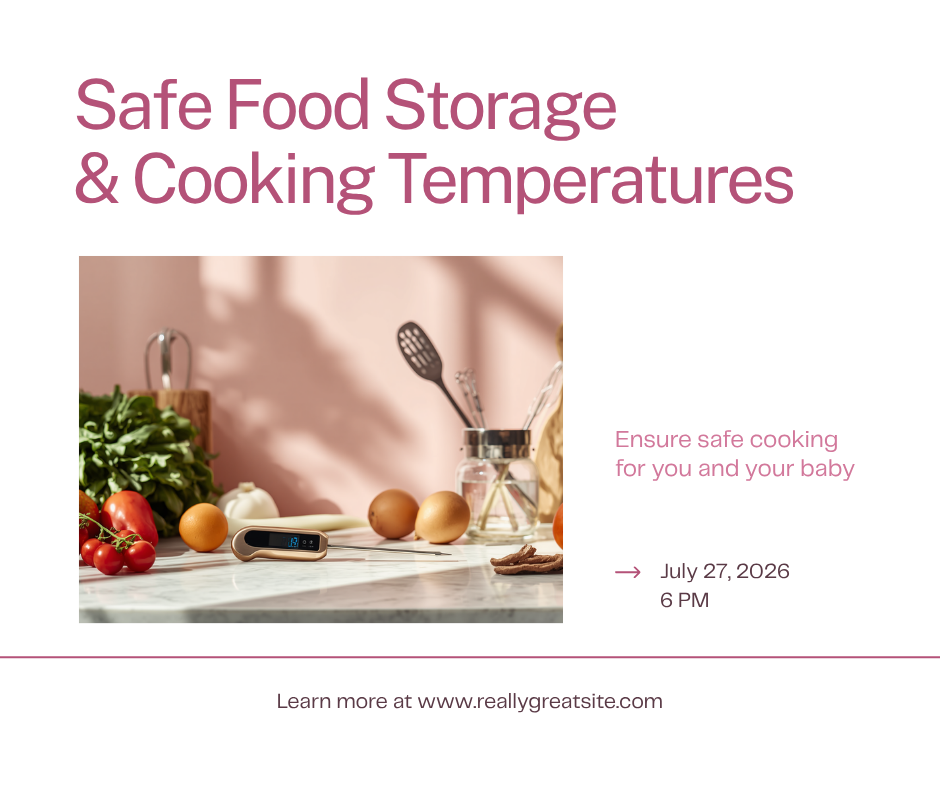
A digital food thermometer is an inexpensive, worthwhile investment during pregnancy. Insert it into the thickest part of the food, away from bone. Aim for these internal temperatures:
Meat, poultry, and eggs
Poultry (chicken, turkey) should reach 74°C (165°F). Ground meats such as beef or pork need 71°C (160°F) — no pink burgers during pregnancy. Whole cuts of beef, pork, and lamb are safe at 63°C (145°F) with a three-minute rest. Eggs should be cooked until both the white and the yolk are firm; avoid runny yolks, homemade mayonnaise, and raw-egg desserts like mousse or tiramisù unless made with pasteurized eggs.
Fish and leftovers
Fish is safe at 63°C (145°F), when the flesh turns opaque and flakes easily. Any leftovers you reheat should be brought back up to 74°C (165°F), steaming hot throughout — this step is especially important for deli meats and soft cheeses, which reheating renders safe.
Smart refrigeration habits
Set your refrigerator to 4°C (40°F) or below and your freezer to -18°C (0°F). A cheap fridge thermometer removes the guesswork. Store raw meat, poultry, and fish on the bottom shelf in sealed containers so their juices can never drip onto ready-to-eat foods — a classic source of cross-contamination.
Refrigerate groceries within two hours of buying them, thaw frozen food in the fridge rather than on the counter, and never taste food to check if it has spoiled. Trust dates and your storage discipline, not your senses.
Preventing cross-contamination
Even perfectly cooked food can be contaminated afterward. Use separate cutting boards for raw meat and for produce, wash your hands and utensils with hot soapy water between tasks, and never place cooked food back on a plate that held it raw. These small routines close the gaps that temperature alone cannot.
Eating out with confidence
At home you control the thermometer; at a restaurant you rely on the kitchen’s standards. That is exactly why verified protocols matter. Don’t hesitate to ask your server whether a dish is fully cooked or whether a cheese is pasteurized — a well-run kitchen will answer without hesitation. Favor freshly cooked, hot dishes over buffets and pre-prepared cold items.
Dine out the safe way
A SafeBloom-certified restaurant has already put these temperature and handling protocols into practice, so you can enjoy a meal out without second-guessing every plate. From ingredient traceability to strict temperature control, certification means peace of mind is built into the experience.
Find a SafeBloom-certified restaurant in our directory and eat out with confidence. Run a restaurant? Discover how to become SafeBloom certified and welcome a growing community of guests who are looking for exactly what you offer.