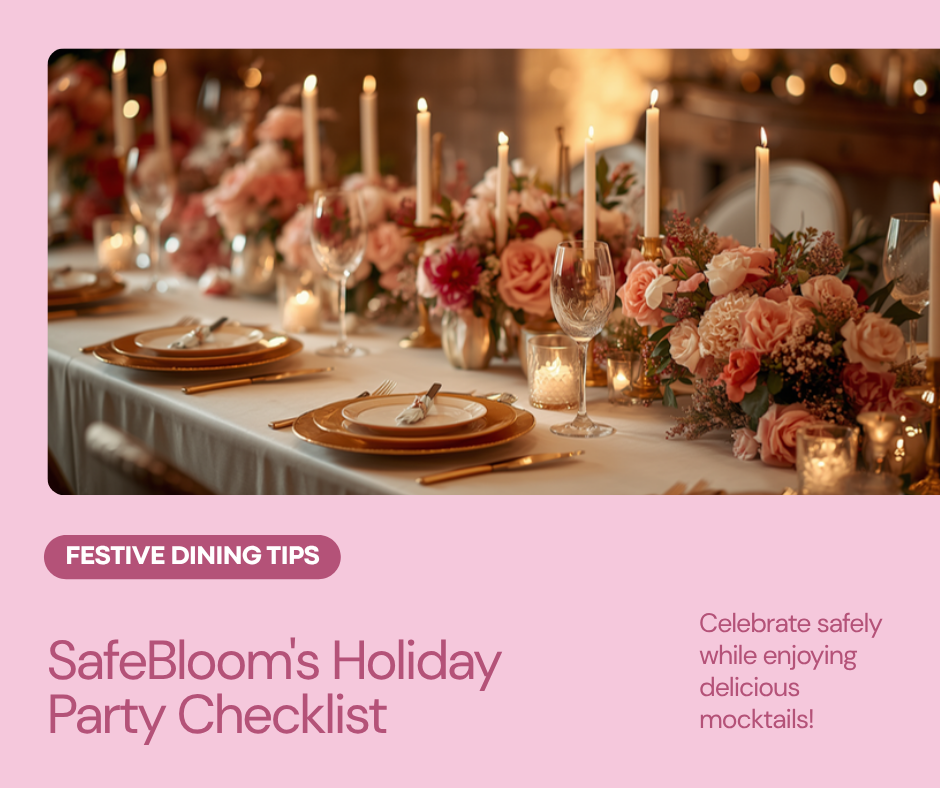
December is the busiest month of the restaurant calendar: office parties, family lunches, set menus and long tables. For a pregnant guest, the festive season brings familiar food risks in unfamiliar settings, often with buffets, shared platters and pre-set menus chosen weeks earlier. The good news is that most of the risk can be handled with a few well-timed questions.
Why festive dining needs extra care
Large group bookings usually mean food prepared in volume, held warm or cold for a while, and served family-style. The NHS and the UK Food Standards Agency note that listeria can grow even at fridge temperatures, which is why chilled ready-to-eat foods such as smoked fish, pâté and soft cheeses are on the “avoid” list for pregnancy. The ECDC and EFSA also report that listeriosis, while rare, is among the more serious foodborne infections for pregnant women and their babies.
Holiday menus often feature exactly these items: smoked salmon starters, pâté and cheese boards, plus egg-based desserts and cold cuts. They are not “bad” foods, but they need a conscious choice.
The festive foods to check
Starters and cold platters
Smoked salmon and other cold-smoked fish, pâté (including vegetable pâté if it’s kept chilled for long), and cured or uncooked deli meats are the usual suspects. Ask for a cooked alternative: hot-smoked fish that is fully cooked, a roasted vegetable starter, or a hot soup.
The main course
Turkey, goose and roast meats are fine when cooked all the way through. The NHS advises that meat should be steaming hot with no pink inside. Ask whether the kitchen holds roasts for long periods and whether reheated portions reach a safe core temperature. Stuffing cooked inside a bird, or gravy that has sat out, deserves the same question.
Cheese boards
Unpasteurised and mould-ripened soft cheeses, such as brie, camembert and blue-veined cheeses, are on the NHS caution list unless cooked until steaming hot. Hard cheeses such as cheddar or parmesan are generally considered fine. If the cheese course is shared, ask which cheeses are pasteurised, or choose a baked alternative.
Desserts and drinks
Mousse, tiramisù, eggnog, and homemade custards or creams may contain raw or lightly cooked eggs. EFSA identifies raw eggs as a recognised source of Salmonella, so ask whether pasteurised eggs are used. For drinks, mulled wine and cocktails are out, but many venues now offer excellent alcohol-free options. Ask for them proactively rather than settling for juice.
Buffets and shared platters
Buffets add one more variable: how long food has been sitting out. As a rule, hot food should be kept hot and cold food kept cold; anything lukewarm or visibly left out for a long time is best skipped. Choose dishes that are freshly replenished, look for sneeze guards and separate serving utensils, and go early in the service if you can.
How to handle the office party
If you haven’t told colleagues yet, you don’t have to. Contact the venue or organiser ahead of time and say you have a “dietary requirement” so the kitchen can prepare a safe meal. A simple message works: “One guest needs a fully cooked, pasteurised-dairy, no-raw-egg menu. Can you confirm what’s available?” Most venues are used to this kind of request.
A five-minute festive checklist
- Book early and mention your requirements at least 48 hours ahead.
- Ask for the menu in advance and identify smoked fish, pâté, soft cheese, raw egg and cold cuts.
- Request cooked substitutes for each of those courses.
- Check roast meats are piping hot throughout.
- Choose an alcohol-free toast.
- If unsure about a dish, skip it. A missed course is a small price to pay.
This is general information, not medical advice. Your midwife or doctor can advise on your individual situation.
What restaurants can do
For restaurateurs, festive bookings are a chance to stand out. Having a ready-made “pregnancy-friendly” version of the set menu, pasteurised eggs and dairy in desserts, and staff who know what to say makes guests feel considered. The SafeBloom certification is a training mark: an 8-hour online course (4 modules) plus a 15-question final exam, valid for 12 months. It is not a health inspection, but it prepares your team to handle these requests confidently.
Next step
Planning a celebration? Use our Restaurant Finder to explore venues, or read our method to see how we approach pregnancy food safety. Restaurant owners can learn more on the For Restaurants page or start the SafeBloom certification course.