
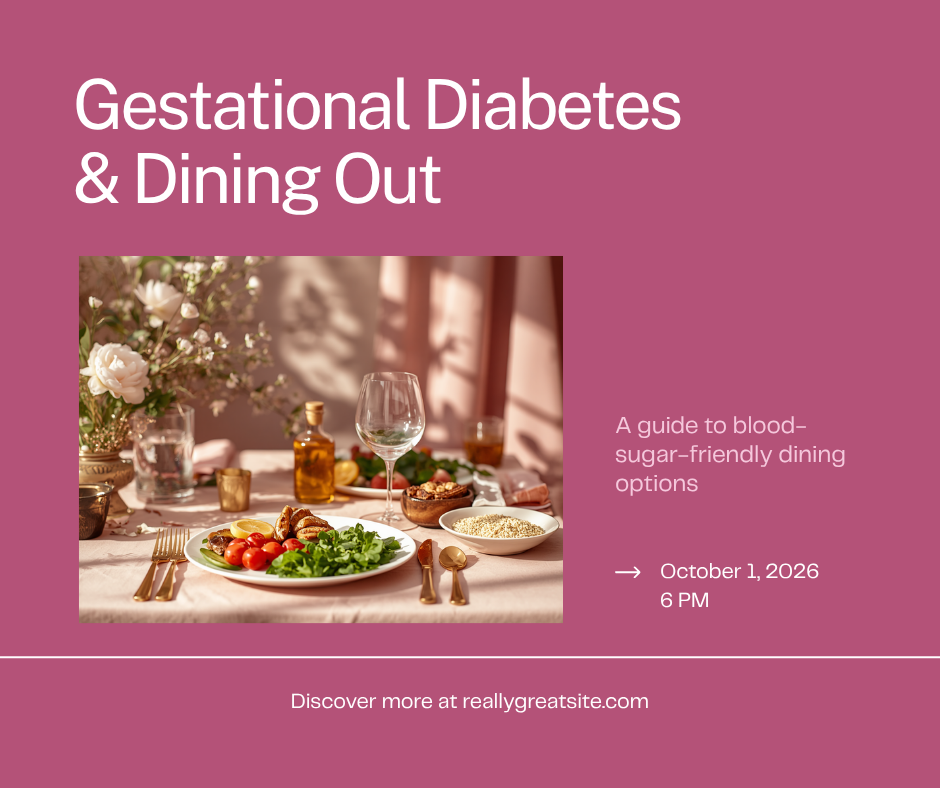
Gestational diabetes affects a meaningful share of pregnancies, and eating out is often one of the first things people worry about after a diagnosis. The good news: with a bit of planning and a restaurant team that listens, dining out can stay enjoyable. This guide speaks to both guests and restaurateurs. It is general information and does not replace advice from your diabetes or maternity team.
What the guidance says
The NHS explains that gestational diabetes is high blood sugar that develops during pregnancy, and that many women manage it with a healthy diet and physical activity, with medication added when needed. Common advice includes eating regular meals, choosing wholegrain and lower-glycaemic carbohydrates, adding plenty of vegetables, and avoiding sugary drinks. Your own plan, set by your clinical team, always comes first.
For guests: ordering with confidence
Starters
Look for vegetable-based dishes, pulses such as lentils or chickpeas, and grilled or roasted options. Fibre slows how quickly sugars are absorbed. Be cautious with battered or breaded items, where flour adds up quickly. Remember pregnancy food-safety basics too: salads should be freshly washed, and soft or unpasteurised cheeses are best avoided.
Mains
Carbohydrates are not forbidden; portion and pairing matter. Consider a smaller portion of pasta, rice or potatoes alongside vegetables and a protein source such as well-cooked meat, fish suited to pregnancy, or fully cooked eggs. Ask whether wholegrain versions are available.
Desserts and drinks
Water, still or sparkling, is the simplest drink. Fruit juices and sugary soft drinks raise blood sugar quickly. For dessert, fresh fruit is a common choice, or share a small portion of something sweet if your team has said that suits your plan.
Questions worth asking
- Is there added sugar, honey or syrup in this sauce or dressing?
- Can I have a smaller portion of the starch, or vegetables instead of chips?
- How is the dish cooked, and what is in it?
- Is there a wholegrain option?
For restaurants: small changes that help
Guests with gestational diabetes are not asking for special menus, just clarity and flexibility. Practical steps include:
- Flag ingredients clearly. Mention sauces with added sugar and the main starch in each dish.
- Offer portion flexibility. Half portions of pasta or rice, and a vegetable side as an alternative to chips.
- Add wholegrain and pulse-based options where they suit your cuisine.
- Brief the floor team so a question about sugar or portions gets a confident, honest answer rather than a guess.
- Keep still and sparkling water front and centre on the table.
Honesty matters: if the kitchen is unsure what is in a sauce, say so and offer a simpler alternative. Staff should never promise that a dish is “safe for diabetes”, since needs are individual.
Where SafeBloom fits
SafeBloom certification is a training mark: an 8-hour online course in four modules plus a 15-question final exam (80% pass mark), valid for 12 months. It is not a health inspection, and SafeBloom does not audit kitchens. What it does is equip restaurant teams to handle pregnancy-related questions, from food safety to allergens to nutrition, with more confidence and consistency.
A few reminders
Keep regular meal and snack timing, follow your clinical team’s advice on blood-glucose monitoring, and if a restaurant meal sends your readings higher than expected, note what you ate and talk it through at your next appointment. That record helps you and your team fine-tune what works.
Are you a restaurateur? Discover the SafeBloom certification course or visit our page for restaurants. Expecting? Try the Restaurant Finder to find places near you.
Sources: NHS (Gestational diabetes). General information only; it does not replace medical advice.