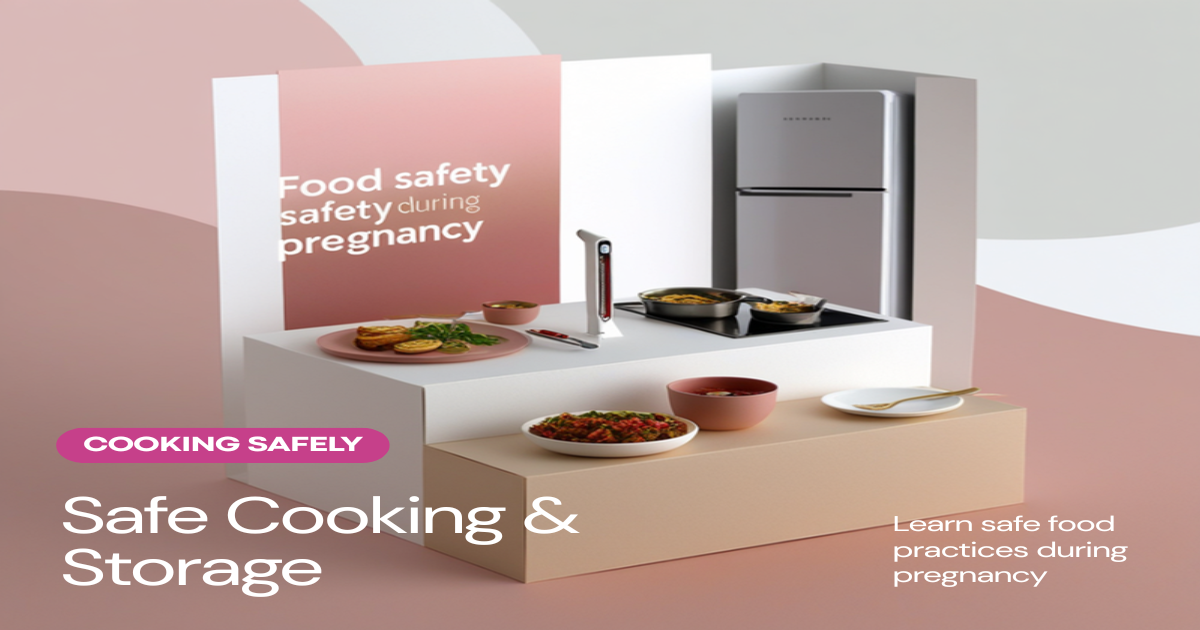
When you’re pregnant, food safety often gets framed as a long list of things to avoid. But there’s a more empowering way to think about it: most foodborne risks in pregnancy come down to a handful of kitchen habits around temperature, time and cleanliness. Get those right, and you can eat a wide, satisfying diet with confidence. This guide focuses on the practical mechanics — how to cook, chill and store food so that harmful bacteria never get the chance to grow.
Why temperature is your best defense
Bacteria such as Listeria, Salmonella and E. coli live and die by temperature. Below a certain point they slow down or stop multiplying; above another, they’re killed outright. The danger zone — roughly 4 °C to 60 °C (40 °F to 140 °F) — is where they thrive. The entire logic of safe cooking is simple: keep hot food hot, keep cold food cold, and move food through the danger zone as quickly as possible.
During pregnancy this matters more than usual, because a changing immune system makes the body less able to fight off an infection that a non-pregnant adult might shrug off. The precautions aren’t about being fragile — they’re about removing an avoidable risk during a sensitive window.
Safe cooking temperatures worth remembering
A digital food thermometer is one of the most useful (and inexpensive) tools you can own while pregnant. Judging doneness by color alone is unreliable, especially with poultry and mixed dishes. As general targets, cook food until it reaches these internal temperatures:
- Poultry (chicken, turkey): 74 °C / 165 °F, with no pink meat and clear juices.
- Ground and minced meats: 71 °C / 160 °F throughout.
- Whole cuts of beef, pork and lamb: at least 63 °C / 145 °F, then a short rest — and cook these fully rather than rare during pregnancy.
- Fish: 63 °C / 145 °F, until it flakes easily and is opaque.
- Eggs: cook until both yolk and white are firm; avoid runny or raw-egg preparations unless the eggs are pasteurized.
- Leftovers: reheat to steaming hot, 74 °C / 165 °F, all the way through.
The rules of the refrigerator
Cold storage doesn’t sterilize food — it only slows bacteria down, and some, like Listeria, keep growing even in the cold. That makes how you use your fridge just as important as its temperature.
Set the right temperature
Keep your refrigerator at or below 4 °C (40 °F) and your freezer at −18 °C (0 °F). A cheap fridge thermometer removes the guesswork; many home fridges run warmer than their dial suggests.
Respect the two-hour rule
Perishable food shouldn’t sit at room temperature for more than two hours — one hour if the room is warm (above 32 °C / 90 °F). After that, harmful bacteria may have multiplied to unsafe levels, and reheating won’t always make the food safe again.
Store smart
Keep raw meat and fish on the bottom shelf in sealed containers so juices can’t drip onto ready-to-eat food. Use leftovers within a day or two, and when in doubt, throw it out — the cost of a discarded portion is nothing compared to the peace of mind.
Avoiding cross-contamination
Many foodborne illnesses don’t come from the risky food itself but from what it touched. A cutting board used for raw chicken and then for salad can transfer bacteria directly onto food you’ll eat uncooked. A few habits prevent this entirely: wash your hands before and after handling raw ingredients, use separate boards and knives for raw meat, and never place cooked food back on a plate that held it raw.
Bringing it to the table — and beyond your kitchen
These principles are within anyone’s control at home. Eating out is where it gets harder, because you can’t see the kitchen. That doesn’t mean avoiding restaurants — it means choosing thoughtfully. Favor freshly cooked, hot dishes over cold buffets and pre-prepared items, and ask how something is made if you’re unsure. A well-run kitchen will answer openly.
This is exactly the gap SafeBloom was built to close. We certify restaurants that put verifiable food-safety protocols in place — proper temperature control, safe storage, ingredient traceability and trained staff — so expecting mothers can dine out without cross-examining every dish. It turns “I hope this kitchen is careful” into “I know this kitchen is certified.”
The takeaway
Safe eating in pregnancy isn’t about a list of forbidden foods so much as a set of reliable habits: cook to temperature, chill promptly, store separately, and don’t let food linger in the danger zone. Master those, and you protect yourself and your baby without giving up the joy of a good meal.
Want to eat out with total peace of mind? Browse the SafeBloom certified restaurant directory to find venues that have earned their pregnancy-safe status. Run a restaurant? Learn how to earn the SafeBloom certification and stand out to a growing, discerning audience.