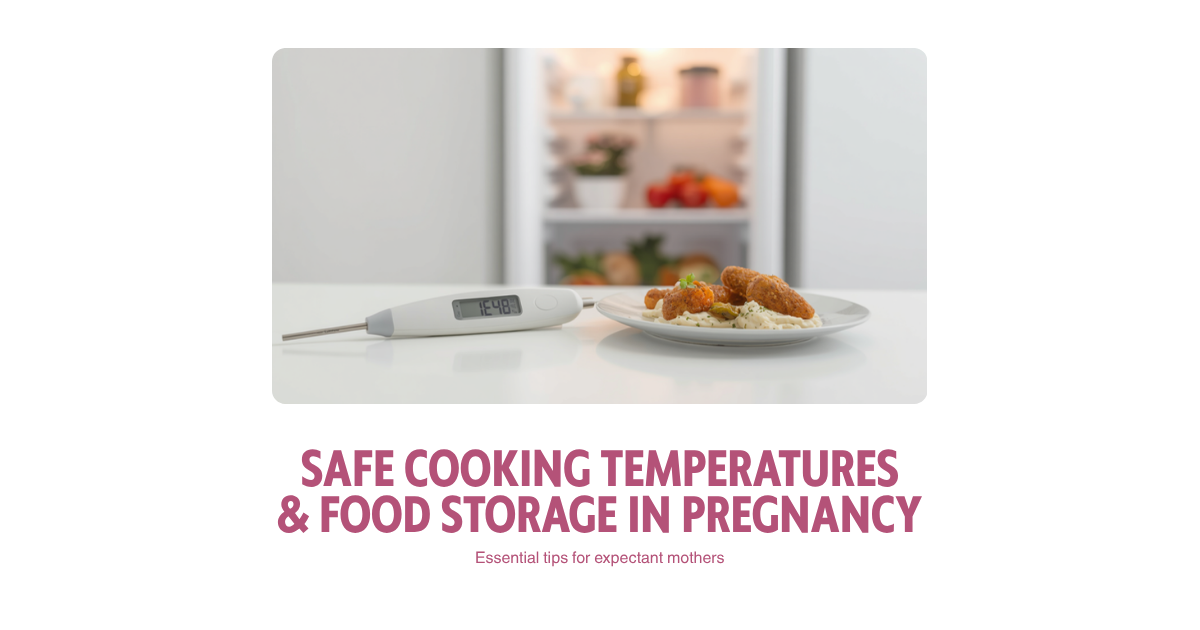
Pregnancy is one of the times when the temperature of your food really matters. The same immune changes that protect your growing baby also make you more susceptible to foodborne bacteria, and many of those bacteria are destroyed by proper cooking and kept in check by proper storage. The good news is that a meat thermometer and a few simple habits cover most of the risk. Here is a practical guide to safe cooking temperatures and food storage during pregnancy.
Why temperature is your best defence
Bacteria such as Salmonella, Listeria, E. coli and Campylobacter thrive in the so-called danger zone, roughly between 5 °C and 60 °C (41 °F and 140 °F). Below that range they grow slowly; above it, sustained heat kills them. The two levers you control in your own kitchen are simple: cook hot enough to destroy bacteria, and store cold enough to stop them multiplying. Get both right and you have removed most of the risk before it reaches your plate.
Safe internal cooking temperatures
Colour and texture are unreliable guides. A burger can look brown in the middle and still be undercooked, while a chicken breast can look pale yet be perfectly done. A digital food thermometer inserted into the thickest part of the food is the only way to be sure. Use these targets:
- Poultry (chicken, turkey, duck): 74 °C / 165 °F.
- Ground or minced meat (beef, pork, lamb burgers, meatballs, sausages): 71 °C / 160 °F.
- Whole cuts of beef, pork and lamb: 63 °C / 145 °F, followed by a three-minute rest. During pregnancy many clinicians advise erring towards well done rather than rare.
- Fish: 63 °C / 145 °F, until it flakes easily and is opaque throughout.
- Eggs: cook until both white and yolk are firm; avoid runny or raw-egg dishes unless they are made with pasteurised eggs.
- Leftovers and ready meals: reheat to 74 °C / 165 °F, steaming hot all the way through, not just on the surface.
Storing food safely
Cooking is only half the job. How you store food before and after cooking decides whether bacteria get a chance to multiply. Keep your refrigerator at or below 4 °C (40 °F) and your freezer at -18 °C (0 °F); an inexpensive fridge thermometer takes the guesswork out. Refrigerate perishable foods and leftovers within two hours of cooking, or within one hour if the room is warm (above 32 °C / 90 °F). Store raw meat, poultry and fish on the lowest shelf in sealed containers so juices cannot drip onto other foods, and keep ready-to-eat items well away from raw ones.
When you reheat leftovers, do it once and bring them to a full steaming heat. Eat refrigerated leftovers within three to four days, and trust the simple rule above all: when in doubt, throw it out.
Avoiding cross-contamination
Many kitchen mistakes happen not at the stove but on the cutting board. Use separate boards and knives for raw meat and for ready-to-eat foods such as salad and bread, or wash them thoroughly with hot soapy water in between. Wash your hands before and after handling raw meat, poultry, fish and eggs. Rinse fruit and vegetables under running water, even those you plan to peel, and never let cooked food return to the same plate that held it raw. These habits cost nothing and close one of the most common gaps in home food safety.
The thawing trap
Defrosting deserves special attention because it is where temperature control most often slips. Never thaw meat or fish on the kitchen counter, where the outside warms into the danger zone long before the centre is ready. Instead, thaw in the refrigerator overnight, in cold water changed every 30 minutes, or in the microwave immediately before cooking. Once food is thawed, cook it promptly and do not refreeze it raw.
Eating out with confidence
At home you control every temperature; in a restaurant you do not. That does not mean avoiding restaurants altogether. It means choosing places that understand the needs of an expectant diner. A well-run kitchen can tell you which dishes are cooked through, how ingredients are stored, and whether items are pasteurised. Staff trained in food-safety protocols turn an evening out from a source of worry into a moment of genuine ease.
This is the principle behind SafeBloom certification: helping restaurants prove, through verified standards on cooking, storage and allergen handling, that they are truly safe places for mothers-to-be.
The bottom line
You do not need to memorise microbiology to eat safely in pregnancy. A reliable food thermometer, a cold fridge, separate boards for raw and cooked food, and careful thawing handle the vast majority of risk. Master these basics and mealtimes stay what they should be: nourishing, enjoyable and safe for both you and your baby.
Want to dine out without the worry? Browse verified venues in our SafeBloom certified restaurant directory, or if you run a restaurant, explore the pregnancy-safe certification course.