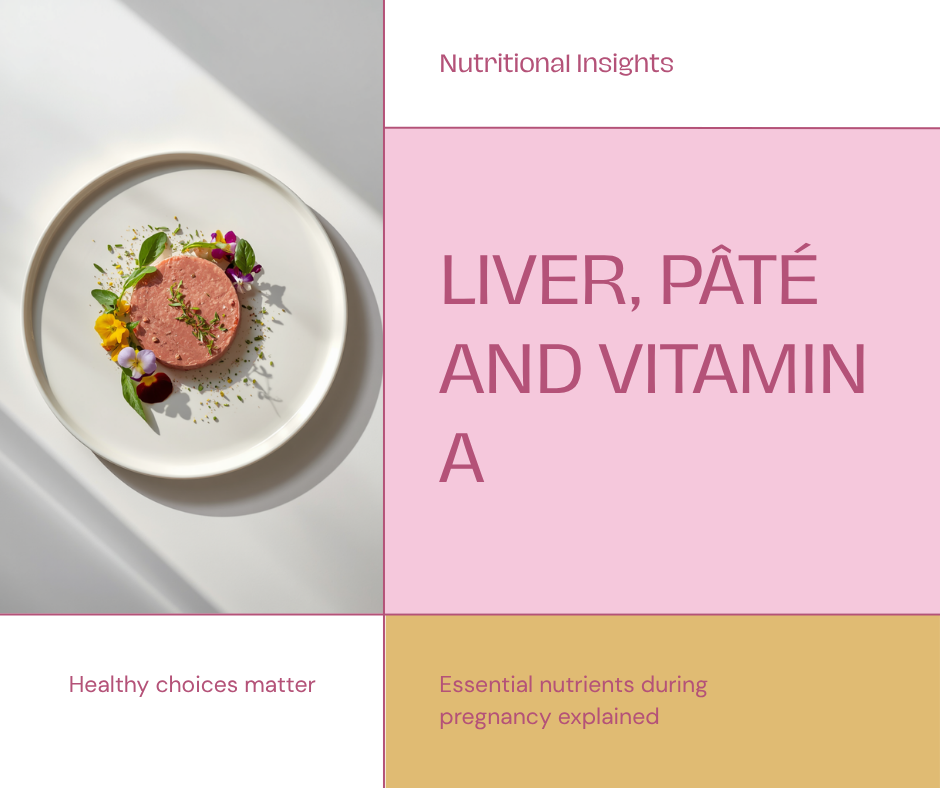
Liver is one of the most nutrient-dense foods there is, and one of the few that health agencies tell pregnant women to skip. If you eat out regularly, the tricky part is that liver rarely announces itself. It hides in pâtés, sauces and starters.
Why vitamin A matters, and why more is not better
Vitamin A is essential for a baby’s development. But liver contains it as preformed vitamin A (retinol) in very high amounts, and sustained excess intake in early pregnancy has been linked to a higher risk of birth defects. The NHS advises pregnant women to avoid liver and liver products such as pâté, and to avoid supplements containing vitamin A unless a doctor has prescribed them. EFSA sets an upper intake level of 3,000 micrograms of retinol per day for adults, which is why guidance for pregnancy errs on the side of caution.
The good news: beta-carotene from carrots, squash, sweet potato and leafy greens is converted by the body as needed and is not associated with the same risk.
Where liver hides on a menu
Beyond the obvious liver and onions, ask about:
- pâtés, mousses and terrines, including chicken liver parfait;
- foie gras and similar preparations;
- liver sausage, liverwurst and some charcuterie boards;
- gravies, ragùs and stuffings made with chicken livers;
- cod liver oil and other supplements.
Pâté is a double flag
Refrigerated pâté of any kind, not only liver, is listed by the NHS and ECDC as a possible source of Listeria monocytogenes, which can cause serious infection in pregnancy. Shelf-stable canned or jarred pâté, unopened, is considered lower risk for listeria, but liver-based versions still carry the vitamin A issue. Our guide to cheese and charcuterie in pregnancy covers the listeria side in more detail.
Four questions to ask your server
- “Does this dish contain liver?” Include sauces, stuffings and starters.
- “Is the pâté or mousse made with liver, and is it fresh or canned?”
- “Is the gravy or stock made with offal?”
- “What can you offer instead?” Most kitchens have an easy swap, such as grilled vegetables or well-cooked meat.
An occasional, accidental small portion is not a reason to panic. If it happens often, or you take supplements, mention it to your midwife or doctor.
Getting iron and vitamins without liver
If you were counting on liver for iron, there are plenty of alternatives: well-cooked red meat, pulses paired with vitamin C, well-cooked low-mercury fish, fully cooked eggs and fortified cereals. For vitamin A, orange and green vegetables do the job safely. See also our guide to eating out well on a vegetarian or vegan diet.
For restaurant teams
Marking liver dishes clearly and training staff to answer “does this contain liver?” with confidence is a small step that pregnant guests notice. The SafeBloom certification is a training mark: an 8-hour online course (4 modules) and a 15-question final exam (80% pass mark), valid for 12 months. It is not a kitchen inspection. Learn more on our page for restaurants and our method.
The bottom line
Skip liver, liver pâté and vitamin A supplements unless prescribed, enjoy colourful vegetables, and ask one clear question at the table. This article is general information and does not replace advice from your doctor or midwife.
Looking for somewhere to eat with more confidence? Try the Restaurant Finder. Note that the directory also lists venues that SafeBloom has not verified, so always ask the staff.