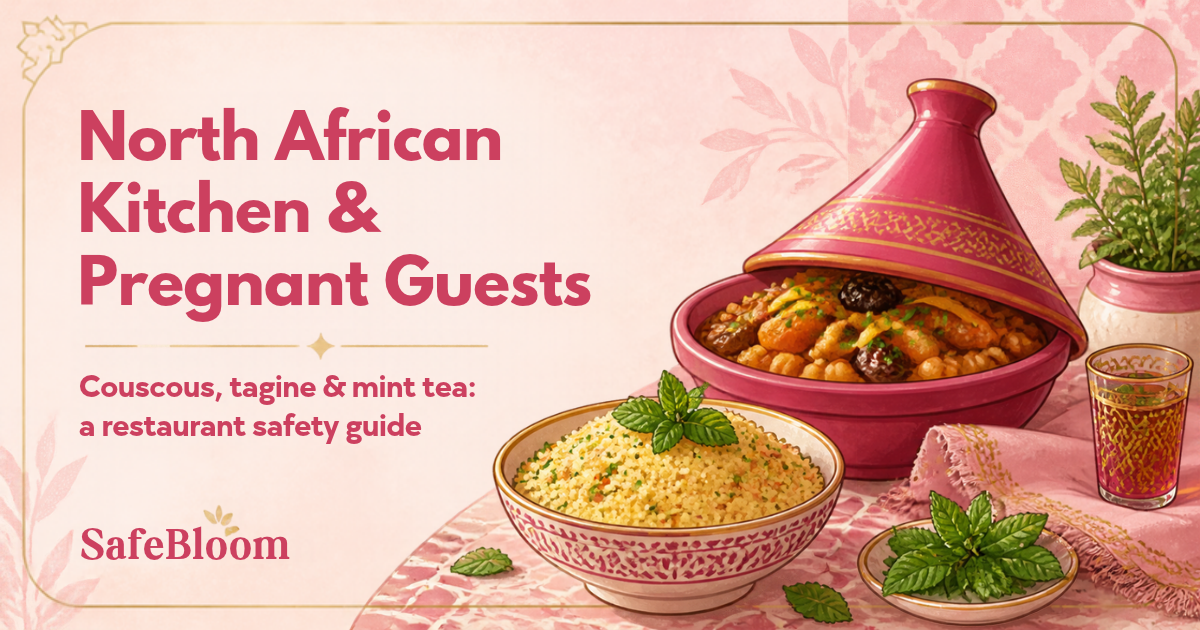
North African cuisine is a gift for pregnant guests: slow-cooked tagines, stewed vegetables, legume soups and fragrant couscous. But a few parts of the menu need a deliberate kitchen process. This guide is for restaurant teams: what to check, what to hold, and how to answer the questions guests will ask. Guidance follows NHS, EFSA and ECDC advice.
Start from the menu: sort dishes into three groups
A simple sorting exercise helps the whole team. Mark each dish as green (fully cooked and served hot), amber (safe with a small change) or red (high-risk for pregnancy unless the recipe changes).
- Green: tagines, harira, stewed vegetable dishes such as zaalouk, grilled chicken, well-cooked lamb.
- Amber: merguez and kefta, brik with egg, fresh salads, yoghurt sauces, mint tea.
- Red unless changed: fresh cheeses made from raw milk, soft or runny eggs, anything served lukewarm after long holding.
Couscous and grains: cooling and holding
Cooked grains and rice can carry Bacillus cereus spores that survive cooking; if the dish sits warm, the bacteria multiply. The NHS advice for rice is a good model for couscous too: serve it as soon as it is cooked, and if you need to keep it, cool it quickly (ideally within one hour), refrigerate, and use within a day. In your HACCP plan, record the cooling time and avoid topping up a hot-holding container with older batches. Hot-hold at or above the temperature set by your plan and national rules (63 °C is a common reference).
Tagine: slow cooking is not a free pass
Long cooking is protective, but the risks sit in what happens next: portions left on a counter, reheating that never reaches temperature, or garnishes added raw. Reheat leftovers until steaming hot throughout, and finish with fresh herbs that have been washed. Label batch cook dates and keep them visible to every shift.
Merguez, kefta and skewers
Minced meat and fresh sausages must be cooked through, with no pink and juices running clear (NHS). Do not offer these «medium» to guests who tell you they are pregnant, and use a probe thermometer rather than guessing by colour. Use separate boards and utensils for raw and cooked meat, because toxoplasma and Salmonella are spread by cross-contamination as well as undercooking.
Dairy and eggs
- Fresh cheeses: know the milk. Raw-milk soft cheeses are on the avoid list for pregnancy because of Listeria; if you can’t confirm pasteurisation, offer a cooked alternative.
- Brik and pastilla: offer a version with a fully set egg and send it out hot.
- Yoghurt sauces: check the label for pasteurised yoghurt and keep it below 5 °C until service.
Mint tea and caffeine
Traditional Moroccan tea is green tea, so it contains caffeine. Health authorities advise pregnant women to keep intake under 200 mg a day from all sources. Tell guests clearly, and add a mint-only infusion to the menu as a caffeine-free option.
Allergens in this cuisine
Couscous and breads contain gluten, and sesame, almonds, pistachios, celery and mustard turn up frequently, often in spice blends. Under Regulation (EU) 1169/2011 you must be able to provide allergen information for the 14 listed allergens. Keep a current matrix and update it whenever a recipe or supplier changes.
Train the answer, not just the dish
Run a five-minute briefing before service: which dishes are green, amber and red, how to answer «is the egg fully cooked?», and who to ask in the kitchen. Guests trust staff who answer precisely and say «let me check» when they don’t know.
What SafeBloom does, and what it doesn’t
SafeBloom certification is a training mark: an online course of 8 hours across 4 modules, a 15-question final exam with an 80% pass threshold, valid for 12 months. It is not a sanitary inspection, and we do not audit kitchens. It gives your team a shared framework for exactly this kind of menu review. Read our method and the page for restaurants, then explore the SafeBloom certification course.
Pregnant diners can use the Restaurant Finder to look for venues that have completed the training.
This article is for general information and does not replace advice from a doctor or midwife.